
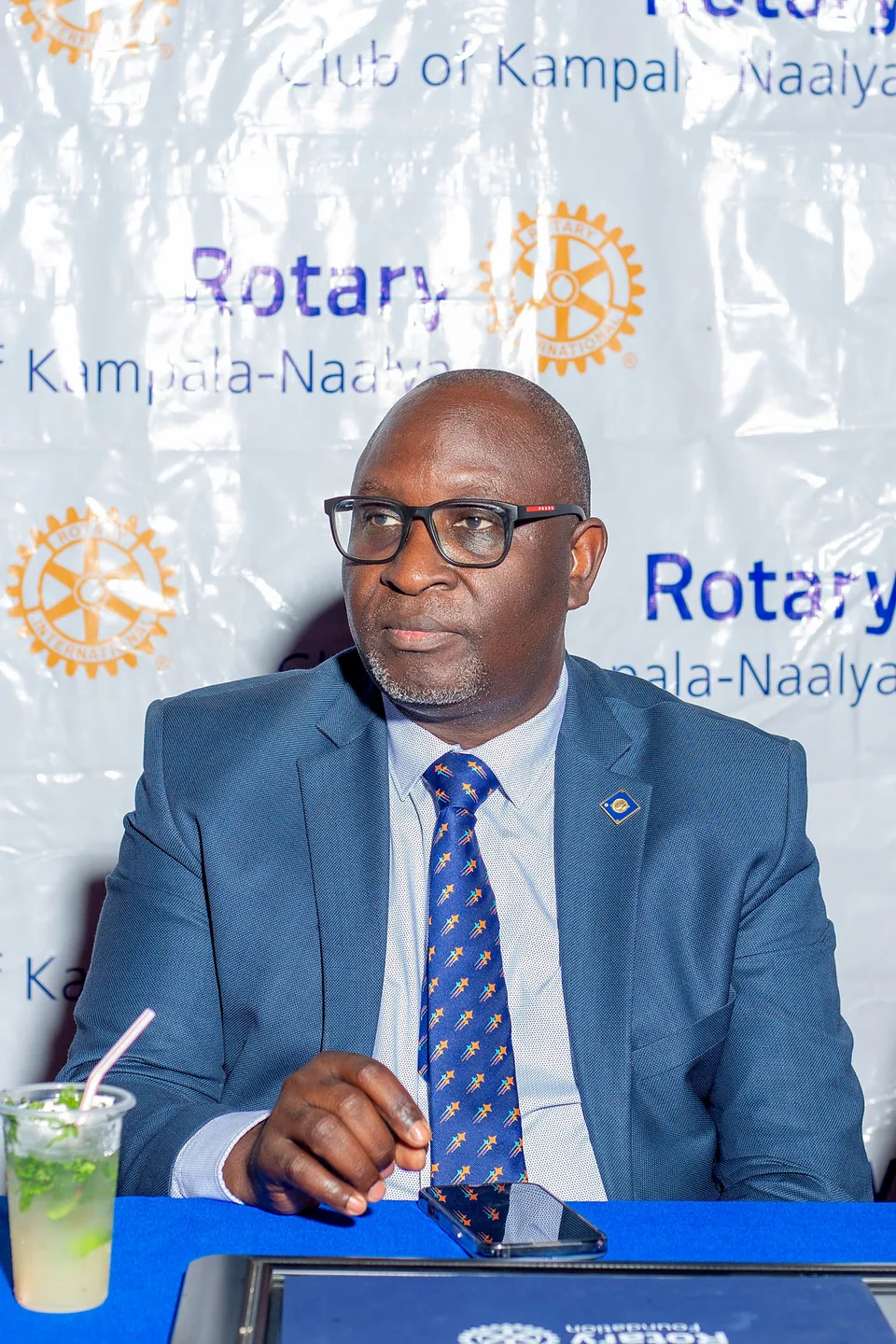
By Editorial Desk
Uganda is no longer just a participant in global Rotary. It is becoming a force that shapes it.
On 16 June 2026, Jennifer Jones, Chair of The Rotary Foundation for 2026-27, wrote to Past District Governor Robert Waggwa Nsibirwa with a clear and deliberate invitation.
She asked him to serve as Regional Rotary Foundation Coordinator for Region 28, covering fifteen countries across East and Southern Africa. His term runs from 1 July 2026 to 30 June 2029.
The appointment was copied to RI Director-elect Emmanuel Katongole and incoming TRF Trustee Francis "Tusu" Tusubira - both Ugandans, a detail that signals something significant about where Uganda now stands within the Rotary world.
Katongole and Tusubira did not arrive at their roles by chance. They earned them through sustained, credible service at the highest levels of Rotary leadership. Nsibirwa's appointment completes a remarkable trifecta.
Three Ugandans, three distinct but complementary leadership roles, all active at the same time on the international Rotary stage.
For a country and a Rotary district that has long punched above its weight, this convergence is historic.
Nsibirwa brings a profile that is rare even among senior Rotarians. A statistician by training and holding a Master's degree in Economic Policy and Planning, he’s a Fellow Emeritus of the Centre for the Study of African Economies at Oxford University - tools he has already deployed in service of Rotary's economic and community development agenda, both at district and zone level.
He served as District Governor of D9211 during 2015-16, when the district covered both Uganda and Tanzania. That tenure shaped collaborative cross-border projects that remain active today. Since then, he has not retreated into the comfortable distance of past leadership.
He has remained in the work - advising on economic development, coordinating visits of Rotary International Presidents, and championing a fundamental shift in how Rotary delivers impact.
That shift is perhaps his most important contribution. Nsibirwa has consistently argued against one-off charitable donations as a model of service. He believes in building economic frameworks that generate resources to sustain service over time.
His flagship initiative, Rotary Vijana Poa (Youth are Cool) - is the clearest expression of this philosophy.
The programme was designed to transform